

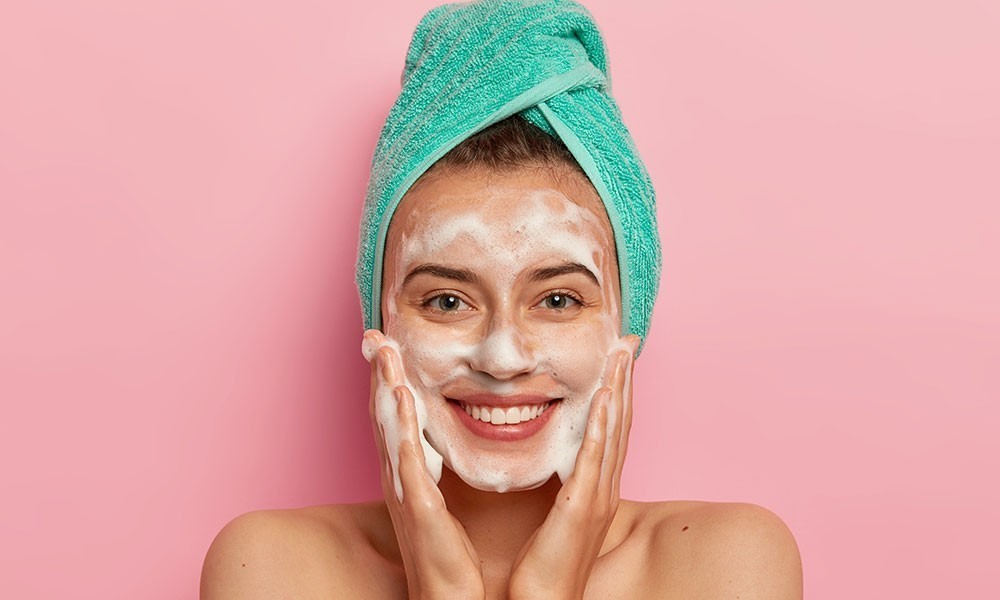
Face washes developed historically, focused on visible cleanliness. Surfactants accomplish that effectively. They dissolve oil, lift surface debris, and rinse away without leaving residue. The problem sits underneath that result. Those same surfactants pull out ceramides and natural lipids that form the skin’s protective layer, and most people don’t register that loss until well into months of use. Skin starts feeling tighter after washing. Dryness appears in places it didn’t before. Sensitivity builds gradually, with no obvious cause.
Bioderma was developed around a principle called ecobiology, which places skin preservation at the centre of the cleansing process rather than treating it as a secondary concern. This wasn’t cosmetic positioning. Skin’s natural balance was maintained through the entire formulation philosophy. When compared with traditional cleansers, the foundational intent of both approaches differs so significantly.
How does the micellar mechanism actually work?
Micellar water functions through molecular behaviour rather than chemical aggression. Micelles are spherical structures with a lipid-attracting core and a water-compatible outer layer. When the product contacts the skin, these structures draw in oil-based impurities, makeup residue, and environmental particles through simple attraction. Nothing is scrubbed, lathered, or rinsed. The skin surface is cleared without any disruption to its underlying composition.
Standard cleansers work through a different process entirely. Their surfactant content generates foam by breaking down oil, but that breakdown extends to the skin’s own moisture-retaining compounds. The acid mantle gets disrupted. Moisturising factors naturally decrease with age. Clinical dermatology has consistently observed that people’s sensitive skin is often due to their cleansing habits, not any inherent condition.
Clinical formulation
Most face wash development sits within a cosmetic production framework. Texture, fragrance, packaging appeal, and lather quality guide formulation decisions alongside ingredient function. The result is a product category where tolerability is tested under favourable conditions rather than across genuinely compromised skin populations.
Formulations developed in collaboration with dermatologists and allergologists operate under stricter criteria. Reactive skin, sensitised skin, and post-procedure skin become the baseline rather than the exception. Alcohol, synthetic fragrance, and parabens are excluded from core formulations because their effects on barrier integrity are well documented. That level of clinical discipline is not standard across the wider face wash market, and it accounts for why certain products remain consistently recommended in dermatological settings long after newer alternatives have come and gone.
Barrier integrity across extended use
When evaluating products, the skin’s long-term effects are rarely taken into account. Most people judge a cleanser by the way it feels, smells, and looks after they have rinsed it off. Slower effects are only evident over time. There is a gradual increase in transepidermal water loss. A cleanser that keeps removing cosmetics causes the skin to produce more sebum. As skin becomes increasingly sensitive, its baseline shifts noticeably.
Keeping lipid composition during cleansing prevents this compensatory cycle. With a barrier that remains intact throughout each wash, the oil glands are not overworked, and inflammation is not triggered as a result of external factors. The moisture level remains more constant. The reactivity remains low. It takes time for the improvements to take hold, but they are durable. The most accurate description of what barrier-respecting cleansing produces is that the skin settles, not transforms, after years of using surfactant-heavy cleansers.